

Moments of impact from Claude Silver's career
 J. Walter Thompson London (JWT London) · Director Digital Planning & Strategy (London) · April 2010
Shell Motorsport / Ferrari Formula One Social Media Strategy | 2010 In 2010, social media was still largely uncharted territory for global brands. Facebook was often dismissed as something people’s children used, while Twitter was viewed as more of a distraction than a credible business platform. Senior Shell stakeholders were understandably cautious about investing in channels that were still largely untested. At the same time, Formula One fans were already gathering online in huge numbers. They were passionate, vocal, and hungry for content about Ferrari, Shell Motorsport, and the technical partnership between the two brands. The audience was there; Shell and Ferrari simply had not yet built a meaningful way to reach or engage with them. We were tasked with creating a pilot social media program to increase awareness of the Shell–Ferrari partnership and demonstrate how social channels could deepen engagement with Formula One fans. The first challenge was not creating content. It was building belief. As strategy lead, I developed the business case for the program and presented it directly to Shell’s senior marketing team. Working closely with Shell’s Brand Director, I helped determine which platforms to pilot and used competitor benchmarking to show what other brands were already doing, where the market was heading, and where the opportunity existed for Shell. Our goal was to help Shell participate in conversations that were already happening, engage brand advocates in the spaces where they naturally gathered, and increase the brand’s share of voice without compromising control, credibility, or reputation. I served as the lead point of contact with the Ferrari team throughout the engagement and personally authored the governance framework, moderation standards, approval processes, and channel guidelines that would shape how Shell Motorsport showed up on social media. Ferrari also had very little social media infrastructure in place at the time, so the guidelines I created for Shell Motorsport were subsequently adopted by Ferrari. Within the first six months, the pilot channels grew to more than 30,000 engaged fans and generated a measurable increase in positive sentiment toward Shell’s partnership with Ferrari. The results helped turn skeptical senior stakeholders into active advocates for the program and led to the initiative being approved for expansion across Shell’s other motorsport partnerships. What began as a pilot became a scalable social media model for Shell and an early foundation for how two global brands could use emerging digital platforms to reach wider audiences, strengthen fan relationships, and bring a long-standing technical partnership to life in an entirely new way.

 Author, "Be Yourself at Work"
Be Yourself at Work: The Work of Writing It For years I watched people perform at work. I watched leaders dim their light to fit the mold and talented people shrink themselves into an org chart. It cost them their energy, their creativity, and their sense of belonging. Something had to shift, not just for individuals but for how we talk about leadership and culture altogether. This book wasn't meant to be another leadership playbook. It was about naming something I'd felt for years but hadn't seen articulated: that ending burnout, building human-first teams, and creating workplaces where people actually thrive all run through authenticity. Not the polished kind that comes after you've figured yourself out, but the messy, still-becoming kind. The three pillars in the book came from real life. Emotional Optimism came from watching what happens when someone leads with hope instead of fear. Emotional Bravery came from every hard conversation I've had or facilitated, the ones where vulnerability opened doors that politeness kept locked. Emotional Efficiency came from learning that clarity and compassion aren't opposites; they amplify each other. The hard part was writing it so people could feel it, not just read it. That meant being vulnerable in ways that scared me, bringing in my own story as the teenager people said thought too much with her heart, and trusting that it mattered. It meant skipping the corporate polish and asking instead what was actually true. Twenty-five years of building teams, coaching leaders, and listening to people describe what was breaking in their workplaces gave me patterns and insight, thousands of conversations that shaped how I understand humans at work. The book became my attempt to turn that into something people could use on Monday morning. It became a USA TODAY bestseller. People told me it changed how they showed up. Teams used it to rethink their culture. The response confirmed what I suspected all along: people are tired of pretending and want permission to be themselves, along with language for why it matters. Writing this book was really about stepping fully into what I already knew. It meant testing my own three pillars on the page, choosing authenticity when I could have played it safer, and trusting that my voice, heart-centered, direct, grounded in both research and real experience, was enough. Then it was putting it into the world and watching what happened when people gave themselves permission to listen.


 VaynerX · Chief Heart Officer
I have been the world's first Chief Heart Officer, redefining what executive leadership can look like. By bringing together emotional intelligence, organizational psychology, leadership coaching, and business strategy, I demonstrated that trust, belonging, and human connection are not "soft" initiatives—they are measurable drivers of innovation, retention, leadership effectiveness, and long-term organizational performance. Building Organizational Capacity Over the past decade, I have helped build the human infrastructure of one of the world's most recognized modern marketing organizations. As Chief Heart Officer at VaynerX, I have partnered with our CEO and executive leadership to create an environment where high performance and humanity reinforce one another rather than compete. My work has focused on increasing organizational capacity—the ability of leaders and teams to navigate growth, change, complexity, and uncertainty while strengthening trust, accountability, and connection. Leadership Development & Coaching I designed and led more than 100 leadership development experiences, executive coaching programs, manager trainings, and learning initiatives that reached thousands of employees across multiple countries. Rather than simply teaching leadership skills, these experiences helped leaders become better coaches, more effective communicators, stronger decision makers, and more emotionally fluent humans. The goal was never learning for learning's sake—it was building leaders capable of creating teams where people could thrive and perform at their highest level. Culture & Organizational Design My work extends far beyond traditional HR. I have helped shape the systems, behaviors, and leadership practices that define how our organization operates every day. From executive coaching and succession planning to employee experience, feedback cultures, trust-building, and organizational transformation, I have worked to ensure that culture becomes something people experience—not something written on a wall. Relational Intelligence I believe every business outcome is ultimately a relationship outcome. Throughout my career, I have focused on helping organizations strengthen their relational intelligence—the ability to build trust, navigate difficult conversations, create psychological safety, coach with empathy, and lead with accountability. When relationships improve, collaboration improves. Innovation accelerates. Teams become more resilient. Performance follows. My Philosophy I've spent my career proving that investing in people is not separate from business strategy—it is business strategy. Organizations don't succeed simply because they hire talented people. They succeed because they create the conditions where talented people can trust one another, grow together, and do their best work. My work has always been about helping organizations build that capacity at scale.
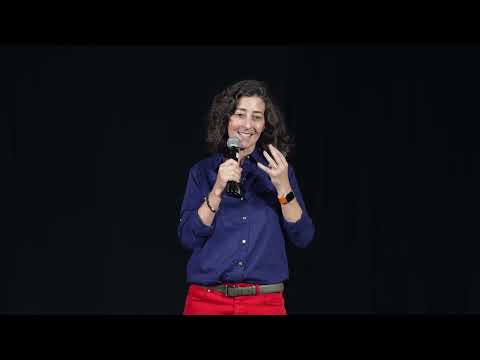
VaynerX · Chief Heart Officer · November 2025After years of working with companies as Chief Heart Officer at VaynerX, I recognized a fundamental disconnect: leaders were obsessing over productivity metrics while their teams were burning out. Employees' core human needs were being overlooked in favor of pure performance measurement. This observation became the catalyst for pitching my TEDx Stamford talk, "Why Companies Need More Heart," addressing what I saw as a critical gap in modern leadership philosophy and execution. The preparation process was intensive and iterative. I partnered with a TEDx coach for three weeks to refine my core message, working through multiple rewrites to distill years of experience into a compelling narrative. I tested early versions in front of small audiences to identify which stories created the strongest emotional resonance. The most challenging aspect was condensing everything into the 18-minute TEDx format without sacrificing the talk's emotional impact—every word had to earn its place. The talk has become a calling card for my work, both at VaynerX and in my external consulting and keynote engagements. The response I have received has validated what I'd long suspected: organizations everywhere are hungry for a new leadership paradigm that puts human connection and emotional well-being at the center of business success.
 HiBob · Advisory Board · May 2020
As VaynerMedia scaled past a critical headcount threshold, our reliance on a patchwork of spreadsheets and documents made it nearly impossible to track performance reviews consistently across teams. Managers were essentially flying blind, lacking a unified system to support feedback and growth conversations — a gap that risked undermining both employee development and organizational consistency as we grew. I co-led the vendor evaluation and selection process to solve this problem, ultimately championing HiBob as the right platform and securing buy-in from our CFO. From there, I partnered closely with HR and regional leads to design a comprehensive rollout plan, including training managers on the new review and feedback workflows so the transition would stick at every level of the organization. Along the way, we navigated important cultural watchouts, discussing and addressing them head-on before moving into full execution and rollout mode — timing that coincided with the onset of COVID, adding an extra layer of complexity to an already ambitious change management effort. The results validated the approach and the persistence it took to get there: within a three-year window, 90% of our 2,000+ employees globally were using HiBob for performance reviews. Review completion rates jumped from roughly 60% to 95%, and managers across every region reported that feedback conversations became far more consistent and data-driven. What started as a fix for a scaling pain point became a durable, global infrastructure change that reshaped how the company approached performance and growth conversations.