In 2024 I stepped into a new leadership role while the organization was scaling headcount 2x and performance across the board was weak. I was also working with a manager I hadn't partnered with before. Rather than rely on standard playbooks, I built my own operating system for coaching and running a team, based on my own observations of what separated strong performance stretches from weak ones and on what I was reading at the time about leadership and feedback loops.
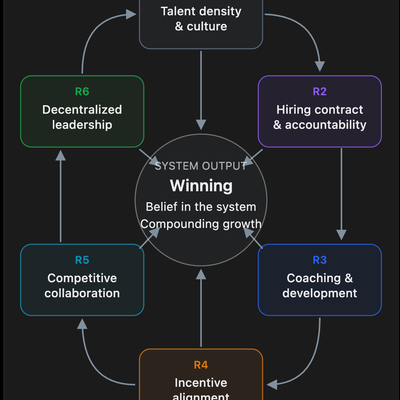
The system started with hiring and culture. When I brought someone onto the team, I set what I think of as a hiring contract: we believed in their potential to succeed, and in exchange they committed to engaging fully in their own development. I also paid close attention to talent density — when a team has pockets of underperformance, even capable people get comfortable operating below their potential, but raising the overall caliber of the team raises the floor for everyone and makes strong performance the norm rather than the exception.
The core of the system was coaching cadence. I moved from informal, reactive coaching to weekly coaching blocks that every rep participated in, regardless of tenure or performance, so coaching stopped being seen as something reserved for people who were struggling. Sessions often started with a long diagnostic conversation to find the actual root cause behind a problem — a rep who looked like they had a pipeline problem might really have a targeting or messaging problem — and then we'd run short feedback loops: apply a change in real customer conversations, review the evidence the following week, adjust, repeat. As the system matured, those weekly cycles rolled up into monthly progress checks and quarterly development plans, so day-to-day coaching stayed connected to longer-term growth. I also made monthly business reviews mandatory for the whole team, where every rep presented their own performance and plan for the month ahead, which turned individual lessons learned into something the whole team could use.
 Toast, Inc.