Explore

The product

  • How it worksWhat Trove is, and how your work gets validated and found

The Conference Booth Playbook That Drives Pipeline & Revenue, Not Just Scans

Going to start with the honest statement: I'm not a huge fan of trade show booths. I understand the value of a booth, trust me, I've done thousands of them. My issue is when you have reps who just sit there. Walk any show floor and you'll see people sitting down, on their phone, on their computer. If someone walks up, it's "hey, scan it, here's a pen."

Then compare that to what some of these shows cost. I recently spoke with someone who had a booth at Black Hat for $300,000. I asked what they got from it. A couple hundred scans, and about a month after the show, nothing had turned into an opportunity. "It was a brand awareness thing." And "our competitors were there, so we have to be there." I generally say this to folks: if your competitor buys a billboard, do you have to buy a billboard too? You can't compete dollar for dollar with every competitor because they showed up.

So when I work on a show, the booth is just a home base and the real plan surrounds it. Recently at Unbound, I ran a hugely successful sponsor playbook with Reachdesk. Here’s the run down on what we did.

Pre-book the meetings

We went into Unbound with 35 meetings pre-booked before anyone ever got to the show floor. This is the part people tend to skip, and it's the part that makes the biggest difference on post show pipeline.

People always say, "but what if we don't get the attendee list?" They shouldn’t be deterred though, it really doesn't take too much to figure it out. There's an event app. There's a camera. We have Claude. You can pull that information out, enrich it, and push it into Salesforce or HubSpot. When I tell people this, the reaction is usually, "oh, I didn't think about that." It's right in front of you, so people overlook it.
Nick Bennett's profile
Not validated
For companiesYour team's validated work, in one place
  • AI visibility reportFree: see whether AI finds you when someone asks
  • The company

    • Our missionWhat we believe
    • AdvisorsWho backs us
    • CareersWork with us
    • ContactGet in touch

    Read

    • BlogEssays and updates
    Explore

    The product

    • How it works
    • For companies
    • AI visibility report

    The company

    • Our mission
    • Advisors
    • Careers
    • Contact

    Read

    • Blog
    Sign inSign up

    Getting the list is the easy part, though. You still need a real reason to reach out and genuinely good copy. Otherwise you're just another email.

    Give people something worth walking over for

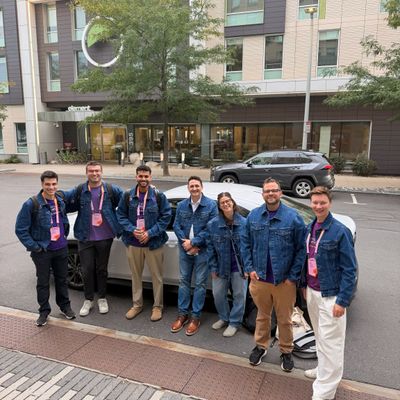
    Conference show floors are crowded. If you show up looking bland or the same as everyone else you can’t expect much interest. You need to really think hard about what is interesting and memorable. Give the attendees something that is worth stopping and chatting over. Our activation this year was custom denim jackets, built around the idea of going from URL to IRL. Everything we see is digital, so how do you bring people together in real life?

    We created custom patches that folks could iron on. It was memorable, customizable and created a moment where they could pause and interact with our team. Those little things are so important in creating an experience, and feel worlds away from just getting a pen.

    Treat the booth as home base & lean in to auxiliary events

    The booth was simply where people knew to find us. Easy to find, a place to sit down and chat for a bit. The real work happened in the meetings, the breakfast, the lounge, and the follow-up.

    We ran a breakfast and a lounge with massages, build-your-own flower bouquets, necklace building, and water bottles. All these auxiliary moments created a halo effect around the brand. People were able to interact with us multiple times and further those connections.

    At the end of the conference we had held meetings with anyone we prebooked and had set many, many more. We met with high value prospects multiple times between breakfasts, massages, at the booth, etc.

    When the booth is being broken down most teams are counting the number of scans. Our team already had qualified pipeline. That is the difference between fantastic ROI and just getting a list of emails.

    Key metrics

    - 35 meetings pre-booked before the show floor opened

    - 60 meetings by the end of day 3

    - 30% meeting to qualified opp conversion 2 weeks post show

    Media

    • Reachdesk Team

      Reachdesk Team

    • LinkedIn

      Blinq Boosts Lead Capture at UNBOUND | Nick Bennett posted on the topic | LinkedIn

      UNBOUND Boston wrapped 72 hours ago, and we already have 60 meetings booked for this week and next. Here are the stats by the end of Day 3: 60 total meetings secured (36 pre-booked: 25 new biz, 11 customer) 54 floor conversations logged with direct context 54 personalized follow-ups sent within 24 hours 24 meetings booked directly from those conversations Those numbers aren’t possible without a proper lead-capture setup. I used to juggle having conversations, taking notes, and saving contact details, between the Notes app on my phone, an actual notepad, or my memory. By the time I got to sending follow-ups to the people I saw real opportunities with, I’d either forgotten the details of our conversation, didn’t have their contact details, or both. And if I relied on event CSVs, they arrived a week later. By then, I was essentially reaching out cold and at that point, nobody remembers what you talked about. Once I started using Blinq during every conversation at UNBOUND, every contact record I scanned gave me a verified email and attached my conversation notes before I even left the room. When I followed up with a VP of Marketing, I wasn’t sending generic fluff. I referenced our 3-minute chat by the coffee station about their SDR event cadence, answered the specific question they asked, and included relevant resources. Speed matters, but context is what gets the response. If you want actual pipeline from your next field event, stop relying on delayed badge scanner exports. Check out Blinq if you don’t know where to start. PS: The team is BUSY now. | 34 comments on LinkedIn

    • LinkedIn

      Years ago I was standing behind a 10x10 booth at a conference in San Diego scanning badges for three days straight. I collected something like 200 leads. My manager was thrilled. I was exhausted… | Ni

      Years ago I was standing behind a 10x10 booth at a conference in San Diego scanning badges for three days straight. I collected something like 200 leads. My manager was thrilled. I was exhausted. And when I got back to my desk and actually looked at the list, maybe 15 of those people were real targets. The rest were people who wanted a free t-shirt or wandered in because we were next to the coffee station. That experience broke something in my brain about how events are supposed to work. So the next conference on my calendar, I skipped the booth entirely. I booked a breakfast at a restaurant two blocks from the venue. Invited 12 people I actually wanted to talk to. Kept it small on purpose. No slides, no agenda, just a table and a conversation about what was actually working in their marketing. Every single person showed up. And three of those conversations turned into real pipeline within 60 days. I spent more on eggs and coffee than I did on the booth. The ROI wasn’t even close. That was the moment I stopped thinking about events as lead capture and started thinking about them as relationship capture. The smaller the room, the better the conversation. The better the conversation, the faster things move after. I’ve been running that play for over a decade now. Which is why I’m fired up about this one. Docket and Reachdesk are hosting a working breakfast called Unbound on September 16 at Pressed Cafe in the Seaport. 7:30 to 9:00 AM. Small group, limited seats, and the whole conversation is about putting real human connection back at the center of B2B marketing. HubSpot UNBOUND is in town that week and this kicks off the first morning. I’ll be at UNBOUND too if you want to connect there. And I live 20 minutes away so this is literally in my backyard. Grab a seat before they fill up: https://lnkd.in/gn6bjvDW Who am I gonna see there? Come hang out with Ben Smith 💜 and myself. | 13 comments on LinkedIn

    NB

    Nick Bennett

    Events & ABM at ReachdeskReachdesk

    ReachdeskReachdesk

    Questions

    ASAsked by Andrew Stockwell

    Thanks for sharing Nick. I've been to hundreds of events, and always leave the vendor showcase underwhelmed. The partners I am most interested in always have some thought leadership to share related to their solution, but they emphasize value delivery. What have you seen that really stands out in terms of thought leadership at vendor booths? Any tricks or tips for how to position that so it really stands out in the crowd?

    NBAnswered by Nick Bennett

    Totally agree, most booths are a logo, a tagline, and a scanner. The ones that stand out usually aren’t selling at all. They’re teaching. A few things I’ve seen work really well: Lead with a point of view, not a product. The booth backdrop is prime real estate and most people waste it on “The #1 platform for X.” A bold, slightly spicy opinion about the industry gets people to stop and react. Then the conversation is about the problem, and the product comes up naturally. Bring original data. If you’ve got a benchmark or survey nobody else has, make it the centerpiece. Print a one-pager, share a stat on the screen, offer to send the full report. People love walking away knowing something new. Do something useful on the spot. Quick audits, teardowns, “bring us your toughest question” office hours. When someone gets real value in 10 minutes, they remember you way longer than a swag bag. Put experts in the booth, not just reps. A practitioner, an analyst, or even a customer who can talk shop changes the whole vibe. Buyers can tell instantly when they’re talking to someone who’s actually done the job. And don’t let the thought leadership start and end at the booth. Post about it before the show, run a small session or dinner around the same idea, then follow up with the content after. The booth should just be one stop in a bigger story.

    EPAsked by Erin Phinney

    We had this convo, but I loved your answer so I want to ask it here for anyone reading: Can you give some examples when you think it's a good strategic choice for a company to perhaps extend the budget for the booth? For example: if they are a raising a round and brand perception is important.

    NBAnswered by Nick Bennett

    Loved our convo! My default is that most companies overspend on the booth and underspend on everything around it, like dinners, side events, and pre-booked meetings. But there are definitely times where going bigger makes sense. You’re raising or just raised. Investors, partners, and future hires are walking that floor too. Showing up looking like a real player can shape how people talk about you, and perception matters a lot in that window. You’re launching something new. New product, new category, rebrand. If the show is your big moment to make noise, a bigger presence gives you the stage to actually tell that story and run demos. You’re breaking into a new market. If nobody in that space knows who you are yet, a tiny booth in the back corner basically confirms that. Sometimes you have to pay a little to get taken seriously. It’s the show where your buyers actually are. If 80% of your ICP is in one room once a year, that’s not the place to go cheap. Your competitors are all in. Not saying you need to match them dollar for dollar, but if they’re front and center and you’re invisible, buyers notice. The one caveat: a bigger booth only pays off if there’s a plan to fill it. Pre-booked meetings, a reason for people to stop by, a team that knows how to work the floor. Otherwise it’s just a really expensive backdrop.

    More from Nick

    • The Niche Creator Playbook: Owning Field Marketing on LinkedIn
    • Authored "B2B Influencer Marketing" a #1 Amazon Bestseller
      NB MarketingNB Marketing · Founder

    See all of Nick's artifacts →

    Related artifacts

    • RMRyan McSweeney
      Improved Optional Meeting Attendance and Program Registration with Fun Video
      SnykSnyk · Senior Talent Brand & Experience Partner · November 2026
    • EPEmily Privot McNamara
      Became a Cited SME on Researching with Older Adults for Ask.UXR.Design
      November 2026
    • PSPranav Sonje
      Building A Research & Outreach Agent Workflows With 300+ Nodes
      BlitzyBlitzy · AI Manager, Product Demand & AI Agents
    • BTBrianne Thomas
      How to Run AI Across Your Funnel Without an Engineer
      Elastic PathElastic Path · Head of Marketing / VP Marketing

    Browse all artifacts →