
Moments of impact from Casey Hill's career
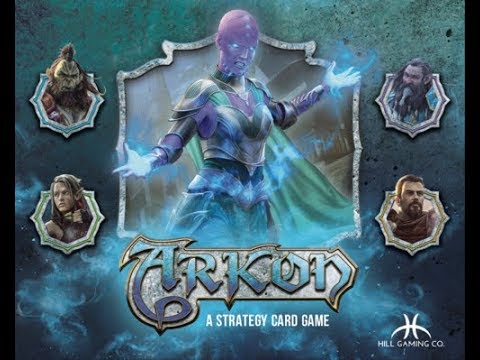
My proudest career moment is a little counterintuitive. It isn’t a SaaS campaign. It’s 800% funding a Kickstarter in 2019 for a board and card game I built from the ground up. It started as a Christmas present. My wife and I usually do creative gifts, and we both like games, so I thought, I’m going to make a game. I built a super early prototype, gave it to her, and we all started playing it. Everyone kind of went, wow, this is really interesting, what if we built this out a little bit? I was working a full-time job the entire time. My wife is a physician and was in residency, working 80 to 90 hours a week, so I’d be in work mode all day and then shift gears into Kickstarter work at night. We started going to local gaming stores, doing playtesting, and building a whole early validation roadmap. We got thousands of people onto an email list and ran thousands of surveys. That’s where I learned which questions are worth asking. Having someone rate the game 1 to 10 wasn’t that valuable for us. Pointed questions were. Where were you really confused? What was the moment you really got into it? Those answers drove the changes we made. It also rewrote our ICP. We came in thinking this was for a very specific nerdy archetype that’s into high fantasy. What we found was that it was more of a family-friendly game. It was easy to pick up. People played it with their kids. People told us, my girlfriend never plays games, but she’s into this. When we later ran paid ads, the data said the same thing: product market fit was in a different direction than we’d assumed. Kickstarter is all about momentum, a lot like Product Hunt. If people show up in the first couple of hours, you land in Kickstarter’s natural algorithms and they start serving you traffic. So the email list and surveys were all building toward getting people to show up on day one: how to follow up, what to ask, what made people come back. I’d spent years giving playbooks to small businesses as a consultant. Now I was running my own ads, setting up my own networks, and hopping on podcasts myself. I got to pressure test all of it on my own product. I had two major early learnings worth sharing. First, our ads taught me how much small setup decisions matter. This will sound silly to anyone with a paid background, but I set my audience to people interested in Kickstarter OR a bunch of other things, instead of AND. It was grabbing tons of people who cared about Kickstarter and could not care less about board and card games. Fixing that one condition cut our cost per acquisition roughly in half. Second, everyone told me shipping would be my biggest problem and to budget six months or more, not the three our production house promised. I thought that was overkill, but they were right. Delays, holidays in China, rounds of back and forth. Now every timeline I build has room for contingencies, anywhere I'm waiting on something I don't control. Ultimately, our Kickstarter campaign was a resounding success and funded at 800%. We sold 4,000 copies in more than 100 countries. After Kickstarter we moved to direct to consumer, and then retailers started placing bulk orders. What I’m proud of is that I had an idea, built it myself, and took it from zero to thousands of people holding it in their hands. Key metrics 800% funded on Kickstarter (2019) Over 4,000 copies sold globally Shipped to 50+ countries Grew from Kickstarter to direct-to-consumer to retail bulk orders

 ActiveCampaign · Senior Growth Marketing Manager
At ActiveCampaign we were a pretty large organization, with customers that adored us, but nobody had heard of us. Everyone’s heard of HubSpot and Mailchimp, but we didn’t have that same notoriety. I remember sitting there thinking about the size of the company and going, this is crazy that we don’t have a footprint. I didn’t want it to just be me talking about us. I wanted our customers to talk about us. So I set out to build an organic campaign that leveraged our best asset: our customers. I decided to forgo stale case studies that would take forever, and only get shared once in a while. I wanted a campaign that had the power to spread quickly and be where our buyers were already spending time, and that meant LinkedIn. We refined the ask for customers down to one formula: a very specific ask, on a very specific day, with very specific things we’d do in return that were valuable to that person. None of them were monetary. The ask became something like: this Friday, we’re asking some of our customers to explain why you made the decision to migrate over to ActiveCampaign and where you came from. Then we figured out what our customers valued. Every archetype is a little different. Ours saw that ActiveCampaign had a big engine: a lot of attention, a high domain rank, a lot of traffic. They wanted to be prominent with us. So we used those assets. We built a wall on the website to feature them and gave them a space to promote themselves. We also rallied the marketing team. A lot of our customers were marketers, so they had webinars and podcasts of their own. When a customer told me they had a new episode coming out Friday, I’d say, awesome, I’m going to share it in a room with 250 people. One time a customer had 19 five-star reviews come in within an hour of their episode dropping. Over a few months we created a real saturation effect, with more than 150 customers posting about us. Larger companies look at different metrics than smaller ones, so we measured two things. The first was share of search. We wanted to be one of the top three vendors people thought of: HubSpot, Mailchimp, and then ActiveCampaign. We regularly polled a group of 3,000+ people to test whether we were top of mind, and we saw about a 28% increase. The second was positive mentions. I cared less about follower counts and more about how many people were saying good things about us. We went from maybe 10 positive mentions a month to more than 100 in a single month. That’s a 10x increase, and you could see it yourself by typing ActiveCampaign into the LinkedIn search bar. Key metrics - 150+ customers posted about ActiveCampaign on LinkedIn - Positive mentions went from about 10 a month to 100+ in one month (10x) - About 28% increase in share of search - No paid incentives


 Stanford Continuing Studies · Stanford Instructor · May 2024
Stanford Extension recruited me as a practitioner-instructor after seeing me post about leveraging influencers, community-led growth, and other less conventional go-to-market tactics. The opportunity was to translate real-world GTM experimentation into a structured curriculum that could help marketers apply these strategies directly in their own roles (low on theory, high on useable tactics) I built the 10-week syllabus around six core GTM tactics, pairing each module with a guest lecturer actively using that tactic in the market to ground the content in real practice rather than theory. Each week, I sent students a recap guide within 48 hours of the session, and I continuously adjusted the following week's examples based on live Q&A discussions to ensure both B2B and B2C students walked away with actionable takeaways relevant to their own contexts. The course had 35 students and closed the term with a 4.8/5 instructor rating, one of the highest satisfaction scores in the program that year, according to the program director. Beyond the numbers, several students reached out afterward to share that they'd landed their first podcast guest spot or launched a community using frameworks from the course, and a handful posted on LinkedIn about applying those frameworks directly in their work. Based on these results, Stanford invited me back to teach a second term, validating both the demand for practitioner-led GTM education and the tangible impact students were able to create from it.


 DoWhatWorks · Chief Marketing Officer · January 2026
As CMO at DoWhatWorks, I set out to build a LinkedIn strategy that could break past our owned distribution and generate massive external reach. I hypothesized that if we created content with a built-in incentive for other brands to share it, celebrating their innovative work rather than just promoting ourselves, it would create a self-reinforcing distribution loop that drove business. I launched a series called "[Company] is the only company I have seen do this," spotlighting unique and rarely-used website elements from B2B brands. Every post was built around one question: "Why would someone share this?" One of the earliest posts, featuring Clay, surpassed 500,000 views and converted Clay into a customer. As the series gained traction, two unexpected mechanisms turned it into a true flywheel: brands began paying to promote the posts as thought leader ads (since they got exceptional CPMs on content that had already gone organically viral about their company), and I started receiving a steady stream of recommendations from the community, people sharing standout websites each week with me via DMs, and this fuled more viral hits (like the post I did on Super's prefilled AI prompt strategy, that got 300,000+ views) The results compounded quickly: the series has generated 6.6 million total views YTD across 22 viral posts, and was voluntarily paid-promoted by half a dozen external companies eager to capitalize on the organic buzz around their brand. Most importantly, the content reached thousands of top B2B marketing executives, several of whom opted into our newsletter or reached out directly for demos. Following the most viral posts (Clay, Warmly, and Super), enterprise demo requests jumped from a baseline of 1-2 per week to 8-10 per week within 48 hours of a post going viral (which I define as crossing 100k+ impressions). This flywheel directly closed $140,000 in business and built $2.1 million in pipeline, while cementing a strong brand association between me, DoWhatWorks, and cutting-edge website best practices in the minds of B2B marketing leaders.


 DoWhatWorks · Chief Marketing Officer
When I looked back recently at what’s worked best for us at DoWhatWorks, partnerships were near the top. Partnerships get a bad rap, partly because the word covers so much. There are integration partnerships and there are content partnerships. Content partnerships have driven a significant amount of business for us, but what’s more unique is that they are not paid spots. We earned our partnerships by finding outlets that have strong relevance to our audience, like Kyle Poyar’s Growth Unhinged and Emily Kramer’s MKT1, and writing a well-researched, in-depth piece for them. For Kyle it was what we learned from 20,000 experiments. For Emily it was how websites are changing in the age of AI. To do this well there are a three key steps: First, you have to really understand the outlet and what they care about. A lot of these outlets are very interested in MCP, CLI, and SDK right now. I’m talking with a lot of the biggest companies, like Stripe and Glean, about MCP as a vector. So I reached out and asked: if I compiled all that data together, would that be an interesting article for your audience? The answer was “hell yeah.” I run a newsletter too, so I know the other side of it. If someone brings me something well researched, full of their own stats and data, that’s great. I get content for free and they get the exposure. But I only say yes if it’s really good, hyper-relevant to my audience, and not overly promotional. Second, is being a good partner on the CTA. I never push for one off the jump. You need to earn that through being a great partner and adding value. I open with something like, I was looking at doing this piece, I thought of you and your audience, do you think this would be an interesting article? Once the relationship is built, outlets like Kyle’s will usually put a little CTA at the bottom on their own. It’s the same approach I used when I pitched podcasts. I’d always come with three very specific topics based on watching the show. You make it really easy for the host to say yes. Third, you need to show up and promote. Something that happens so much with partnerships is that one side does the collab, then peaces out, and the other side does all the work. We promote everything and work to make each piece successful. That’s a big part of why we’ve now done many collaborations with those same top outlets. My test is simple. If you wouldn’t share the collab in your own newsletter and channels, why are you doing it? That’s a reason to rethink who you’re partnering with. From these collabs we’ve driven a ton of business, and we still see long tail across those channels. Many top logos from Apollo to Priceline to Xero, came from our newsletter path. The part I didn’t expect was the consistent traffic from recommendation engines. If you work with newsletters on Substack that can recommend you, those recommendations keep coming. 60-70% of our new newsletter signups come from three recommendation engines, sending us people every day, from collabs we did three months ago. Key metrics - 60-70% of new newsletter signups come from Substack recommendations - 3 recommendation engines sending subscribers daily, months after the collab - $0 spent on placements