
 Return on Reputation
In 2017 an employee suggested I start a podcast and I turned her down flat — I didn't know video, didn't know audio gear, and didn't see the point. For the next few years I stayed focused on marketing for a regional vodka brand, shooting product photography and event video myself, until COVID hit in 2020 and I was laid off. I started consulting on brand strategy, social media, and content marketing right away, and rode the wave of short-form video that every brand suddenly needed. It worked, but it was a grind: the content had a 24-48 hour shelf life and nothing we made ever compounded.
That frustration is what brought the podcast idea back. I launched a show called Proof University with no training, interviewing founders of CPG brands, mostly in adult beverage. I produced 40 episodes, and it changed how I thought about content — instead of disappearing after a day, each episode lived permanently on YouTube, Spotify, and Apple Podcasts, and we cut it into clips that fed our social channels for weeks. Guests shared their own clips too, which gave us reach we hadn't paid for. The conversations also opened doors — about 40% of guests turned into partners or clients, and roughly 80% became genuine friends.
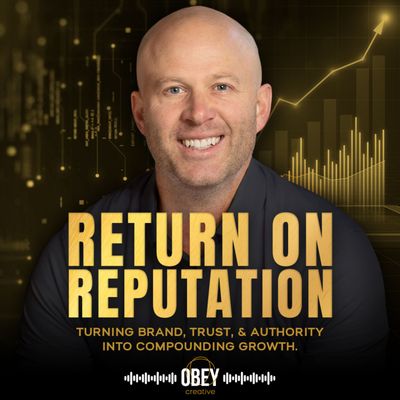
Clients noticed and started asking us to build them podcasts too. We said yes to one, then two, and before long we had a full service line we call the Relationship Engine, now serving 11 podcast clients who use their shows to build authority and reputation instead of chasing algorithm trends. In April 2026 I renamed my own show to Return on Reputation, built around the idea that reputation is an asset you can deliberately build, whether you call it personal brand or character. Since the rename I've recorded 30 episodes with guests like Appcues CEO Ryan Barry, Dan Schawbel, Suneel Gupta of Backable, John Hill (LinkedIn, Techstars), HubSpot CCO Jon Dick, and Peter Zotto of Trove, pulling in over 5,000 listens and views and 300+ hours of watch time.