

Built a chief of staff skill and scheduled agents that save me 10+ hours a week
Before this system, my priorities lived in my head and in about six different tools. So I built a Claude skill that acts as my chief of staff. It keeps one master priority list, pulls new asks out of email, slack, Notion and our meeting notes, and tracks anything blocked on someone else, including who owns it and how long it’s been stuck. It also reads the systems I pull metrics from, like HubSpot and PostHog. Then I put four scheduled tasks on top of it: End-of-day summary: done, in motion, blocked, and tomorrow’s top 3. Sunday weekly wrap: closes with one specific note on where I should delegate or systematize. Daily funnel report: posts the numbers to the team and sends me a private read on what they mean. Friday marketing and growth update: refreshes our Notion page and builds an on-brand 5-slide deck before our end-of-week team meeting. None of this is complex. It’s built to simplify my life, and it saves me about 10 hours a week of admin work that used to go into keeping everything aligned. I’m sharing it so others can copy it. The skill and tasks are sanitized so you can apply them to your own work. Grab them from the doc or the .md files below.
Spoke on Personal Branding Panel for Snyk Employees
Lead by @Katherine Berman and @Ryan McSweeney, Snyk wanted to showcase the concept that having their colleagues build personal brands could drive impact for themselves and the company as well. @Erin Phinney from Trove worked extensively with our team to make it happen. They asked me, along with @Mike Gutner and @Matt Crane to speak on a panel to discuss how to think about and build a personal brand. The topic was a natural fit for what we're building at Trove, so I was excited to join and share a practical take. I focused my comments on how to show impact rather than just claiming it arbitrarily. And how to use the people around you in a room to help tell your story instead around outcome first. The idea was to give Snyk's employees something they could actually use the next time they wanted to talk about their work credibly, whether internally or externally. It put Trove in front of a room of Snyk who is thinking seriously about how personal brand ties to company impact, exactly the audience and conversation Trove is built around.


Recruited & Activated Trove's Advisory Board
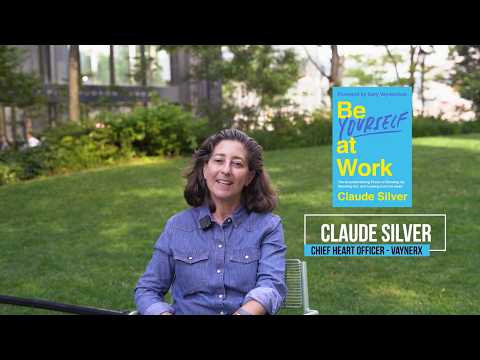
Trove, an early-stage company, recruited and activated a five-person advisory board composed of experienced people leaders. The initiative aimed to bring in practitioners who oversee large-scale career development within organizations, tasked with shaping the product from a user perspective and supporting go-to-market storytelling. The team built a curated list of candidates and used referrals, networking, and outreach, prioritizing in-depth conversations to assess alignment and long-term commitment over quick sign-ups. The resulting board includes: Mike Gutner (Chief People Officer, Toast), Tessa White (Founder, The Job Doctor), Claude Silver (Chief Heart Officer, VaynerX), Sharon Pollard (VP, Head of People & Culture, CloudZero), and Andrew


Recruited & Activated Trove's Advisory Board
Trove is a disruptor company, and like every disruptor, we started from zero. In the early days you're solving two problems at the same time: building something people need, and making sure anyone knows you exist. I knew early on our team would benefit from a different kind of opinion in the room based on our skillsets. We cared about the problem personally, but we needed people who deeply understand careers at a larger scale. Most often that's people leaders. They're practitioners inside real organizations. They see, nurture, and assess tens, hundreds, sometimes thousands of careers a year, on top of managing their own. So I set out to build a small group of advisors whose opinions we actually wanted. The board isn't complicated. We have five stellar people leaders with two jobs to be done: shape the product from the user side, and help us tell the story when we go to market. To build this board, we took a highly targeted approach. My team and I built a curated list of people we admired in the space, then pursued a mix of referrals, warm networking, and cold outreach to open conversations with potential fits. Rather than rushing to sign people up, we had in-depth conversations to assess whether our working styles and their bandwidth aligned with what we needed. We were explicit that we wanted advisors in it for the long haul, not just a logo on our website. The fantastic people who will be building alongside us: - Mike Gutner: Chief People Officer, Toast. Former astrophysicist, nine years at Google. - Tessa White: Founder, The Job Doctor. Author of "The Unspoken Truths for Career Success." Former Fortune 50 HR exec. - Claude Silver: Chief Heart Officer, VaynerX. The world's first Chief Heart Officer. Author of "Be Yourself at Work." - Sharon Pollard VP, Head of People & Culture, CloudZero. AI systems builder and organizational psychologist. - Andrew Stockwell: People leader, formerly Vendr. 20+ years scaling teams, including ZoomInfo.



Worked with Emily Privot and Champion's Design to discover and Launch Trove's visual identity
As founder of Trove, I wanted to establish a professional, credible identity from day one that would be critical to earning trust with early customers and investors. To achieve this, we brought in Champion's Design, partnering with their team...including Paulina, Jennifer, Mike, Michael, and others to build Trove's foundational brand identity, encompassing typeface, wordmark, and logo. Emily Privot, our head of experience along with the Champions team and I led the process from the outset, kicking things off with an in-person session in NYC where I articulated Trove's mission, core values, and view of the market. Champion's Design used this input to help define our brand attributes and developed multiple rounds of design concepts. The new brand identity launched alongside Trove's beta debut, and the response was immediate: several people noted that it made Trove feel like a far more established company than its early stage would suggest. The identity quickly became a key asset, featured prominently in our pitch deck and website, reinforcing credibility with investors and early customers alike as we moved into public launch. Trove is more than just a place to document your work, it needed to feel like a collection was being established over time, the crow helped us take this visual home.


Shaping how Users and Validators actually experience Trove
What did you do? Across several separate streams of work, I made calls that determined what using Trove feels like on both sides of the exchange. I cut onboarding down to the moment of value instead of a data collection step. I moved validation forward so it reads as the point of the product instead of an afterthought. And I sourced, briefed, and managed the brand engagement that gave the whole thing a settled visual and verbal language (that is uniquely differentiated in this market!), including the naming research that killed terms alpha users were misreading. What changed because of it? Onboarding now completes in a median of under two minutes (1m 53s), with an ~8/10 completion rate from start to finish. And the Polymath font system, the current color palette, and the product nomenclature are what every user is looking at right now, replacing terminology that alpha research showed was actively confusing people (e.g. Ledger reading as blockchain). How did you do it? On onboarding, I killed the "let's set up your account" step and swapped the work-history-and-role fields for a single headline. The role-targeting question was creating a mismatch: someone would pick a path like "establish foundation" and then get asked something that felt like a job application. When we built the supporting intake agent that helps users craft a narrative, I designed the framework to guide those questions (storytelling mixed with behavioral question interview techniques). I decided the form should teach the product by getting someone to their first artifact fast, not by collecting structured data upfront. On validation, the product had it buried behind the artifact creation flow, which worked against Trove's whole thesis. Trove only holds up if the witness feels like the point, not a confirmation step tacked on at the end. I moved it forward in the experience because burying it reads as "trust us" instead of "here's who was there." On the design system, alpha interviews had already surfaced confusion with the terminology and visual hierarchy in use, so I ran research with a few dozen participants to figure out what was and wasn't landing, which is what killed Ledger and reshaped how we talked about Artifact. In parallel, I found, vetted, and onboarded Champions as the design partner, wrote the brief, and managed the relationship through delivery. That's where the typeface system, the palette, and the decision to drop the isometric cube motif all came from.


A content first brand play event at Boston's first Tech Week
Ran Trove's first in-person event at Boston Tech Week 2026: a 50-person, no-pitch morning panel on covering what happens to the top tech talent in the age of AI through the lens of Boston's top people leaders. Built to put Trove on the map as the serious, content-first voice in the post-AI career conversation. Trove is launching in Boston as part of a larger GTM strategy. At the time of writing this, we are still in beta. So when Boston hosted its first ever Tech Week, we knew we wanted to use that momentum and be part of the conversation. As a pre-seed startup, we were not going to outspend the larger players in the city. So we focused on the one thing we could do better than anyone else: content. The whole event hinged on landing a banging panel and asking useful, of the moment questions, which we did. The panel was comprised of: Mike Gutner, Chief People Officer at Toast. Sharon Pollard, VP of People and Culture at CloudZero. Kelley Morse, Chief People Officer at Bullhorn. Three different company stages, so the audience got real range instead of three versions of the same answer. From there, we just needed to pick a cool venue that already fit our brand, and limit the room so the experience stayed intimate. We called it "Where Does the Talent Go? Making Sense of Tech Careers in the AI Shakeup." The quick stats: - Over 150 RSVPs. Waitlist closed early. Attendance at capacity. - One panel, one room, one topic, one hour - 3 panelists plus a moderator. No exhibition table. No paid speaker slots. No company pitches. A few notes on the playbook: 1. Do less. And do less, better. Pick 2-3 things you can do better than everyone else and optimize for those. For this event the bet was content. The panel had to be worth the seat on its own merit, so every nice-to-have that did not serve the content got cut. 2. Pick a venue that already fits your brand. I love transforming a space, but transformation costs money you do not have at pre-seed. So pick a venue that is already a vibe. FPAC was a purposeful choice. 3. Let the speakers and attendees shape the content. I had an idea of what we would want to talk about, but to create magical content you need to listen. We asked our expert speakers and attendees what was top of mind for them. Then you know you are adding value, not guessing. Plus it's a great and authentic interaction point with your guests before the event (which also helps with attribution at a free event). 4. Hold the line on what your brand is not. I always say no to a few obvious moves. No sponsor logos front and center. No company demo at the front. No giant panel of seven people, even though more names would have meant more co-promotion. All worth it for the unprompted DMs like this one: "This was one of the best panel discussions I have been to in a long time. Thanks so much!" We had fantastic vendor partners in FPAC and the Coffee Trike. The Trove team was there throughout the entire planning process and day-of. Peter was a fantastic moderator. And the panelists themselves, who gave us their morning and showed up with real takes instead of the talking-points version. The favorite moments from the panel itself: - Kelley Morse on continuing to follow the ROI: "Keep your focus on solving valuable business problems. That is what the company will invest in at scale." - Sharon Pollard on why intellectual curiosity is key: "Don't let your ego get in the way of learning new things." - And the tough love from Mike Gutner: "Some people won't make it in the new way of work. We should be equitable in our upskilling, but not everyone will keep up. The quicker you can learn, the better."

Hosted and moderated Trove's first in-person event at Boston Tech Week
We identified an opportunity to elevate our brand presence in Boston by hosting a public event focused on a topic we kept hearing feedback about from our community. Rather than relying solely on digital channels, we saw the value in creating an in-person forum that would position us as thought leaders while addressing real concerns from people leaders in the market. Working closely with our CMO, Erin, I recruited three highly respected people leaders to participate on the panel: Mike Gutner from Toast, Sharon Pollard from CloudZero, and Kelley Morse from Bullhorn. The caliber of these speakers was critical to drawing the right audience and establishing credibility for the event. The panel drew approximately 60 attendees and generated strong engagement during the Q&A session. The impact extended well beyond the day itself—we saw a meaningful spike in inbound interest following the event, and received feedback from several attendees who told us the panel changed how they're thinking about career development. The event delivered on its core objectives: generating coverage, building brand awareness in the Boston market, and creating authentic connections with potential customers and partners.


The AI workflow for intelligent content briefs (for a non-writer CMO)
I'm currently a marketing team of one, and not a writer by trade. But I run marketing for a pre-seed startup, so I need to be writing. So this was the perfect time to test how AI can improve my content planning and efficiency. I built a content brief skill and scheduled prompt that lands in my inbox every Monday and Thursday at 8:07am. It pulls out the best ideas and themes from both the larger ecosystem and from within Trove's own channels. The workflow isn't overly complex. It scans my own meeting transcripts, Slack, Notion, and Gmail for thematic patterns in parallel with public news, LinkedIn, and X. It flags the moments where a recurring internal theme is converging with a public trend. Those convergences are the trends worth writing into this week. The workflow Internal: meeting transcripts, Slack, Notion, Gmail from the last 7 to 14 days, read for thematic patterns. External: news, LinkedIn, X over the same window. Cross-reference: for every external trend, is this a theme that's been recurring internally? When the two layers converge, that's the strongest signal. Before any of this, the skill runs a saturation check against my last 14 days of posts so it doesn't keep handing me the same hook. And before any trend makes it into the brief, the skill has to be able to articulate the angle cleanly. If it can't, the trend gets dropped. (Full sanitized skill file linked at the bottom. Fork it, swap in your themes, point it at your own sources.) A sample brief Sanitized excerpt from a recent Monday morning. Saturation · "career capital" fresh, last covered 24 days ago · "good friction" saturated, 3 posts in 14 days. Signal 1 - High-priority convergence Trend: Public coverage on AI-generated work samples in job applications is intensifying this week, with several major outlets framing it as a screening problem. Angle: Screening is the wrong lens. The category needs better signal, not better filters. Recurrence: This theme has appeared in 5 internal touch points over the last 14 days, intensifying. Sharp line from a customer call worth surfacing: "We keep buying better filters; what we actually need is work that can't be faked." [PERMISSION NEEDED -- customer call, May 22] Format: LinkedIn post · this week Theme: AI & trust (fresh) It should go without saying, but I'll say it anyway: anything with a quote needs permission before publishing. The skill flags every quote attributable to a real person, customer, partner, investor, teammate, with a "needs permission" tag. The brief is a draft for me. Anything that leaves the brief and lands in a post under an attributed name needs an explicit yes from that person first. A lot of AI content tooling treats source material as fair game by default, and a workflow built that way would be its own kind of joke for a company in the verification business. The scheduled layer: One-off prompts add more work and noise and that's a no go for me. For something to add continuous value, it needs to be scheduled. Mine runs every Monday and Thursday. The brief lands while I'm dropping my daughter at school. The other big benefit of scheduling: the prompt runs against your own data on a cadence, remembers what you've already covered, and surfaces converging trends. The outcomes here are still evolving, but the workflow has let me be faster to produce and publish, and has freed up hours per week. To be clear: this is not meant to read as "this skill replaces content teams," because it doesn't. I cannot wait to be able to hire a content team. It has helped me be a more focused and opportunistic writer. Supporting materials: full sanitized skill file & fillable prompt for any AI chat

Launched Trove to Validate Professional Work with Verified Peer Endorsements
After years of recognizing a fundamental flaw in professional hiring - that it runs entirely on self-reported, unverified data - I decided to finally act on the problem and build a solution. The insight was clear: professionals needed a way to capture and validate their real work, backed by the people who actually witnessed their contributions. This became the foundation for Trove, a platform designed to bring credibility and verification to professional accomplishments. I personally drove the launch by recruiting a founding team of four talented individuals who shared the vision. Bringing together the right mix of skills and perspectives was critical to getting Trove off the ground, and I focused my efforts on assembling a team capable of translating this long-gestating idea into reality. Trove is currently in beta and we're in the early stages of building traction. While measurable impact is still developing, the platform represents a foundational shift in how professionals can document and verify their career achievements, moving beyond unsubstantiated claims to peer-validated evidence of real work.
