

The Problem This Was Solving
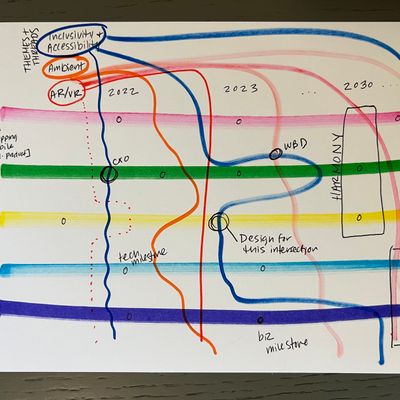
Amazon's Devices & Services Design Group (DDG) ran multiple product lines (Alexa, Fire TV, CoRo, and emerging platforms) on parallel roadmaps with no shared mechanism for leadership to see across them. Design work was being created at every horizon (near term to far term), from immediate H1 delivery to speculative H3 concepts, but no one had a unified view of what was being built, what was being proposed, and how the pieces connected to each other or to the customer.
The result was that product and design decisions were made in isolation. Leadership couldn't see the portfolio as a whole. Engineering, product, and design were misaligned on priorities. Partner teams felt excluded from concept development. And perhaps most critically, the customer experience across devices was fragmenting: Alexa, FTV, and ambient platforms were evolving independently without a shared north star. There was no existing mechanism to surface committed versus uncommitted experience work across organizations. We were making strategic bets without a common frame to evaluate them.
Phase 1: A Physical Nerve Center
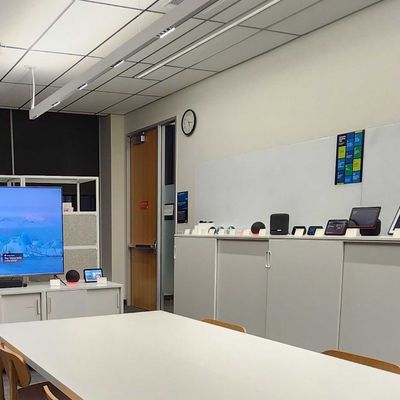
The first iteration of the Nerve Center was a physical space (a literal room where D&S leaders and experience makers could walk in and be immersed in the state of DDG's work). The design problem was deceptively hard: how do you translate a sprawling multi-horizon portfolio into something a VP or partner stakeholder can absorb in twenty minutes?
I steered the definition, structure, and strategy of what that space would hold and how it would communicate. A three-part framework organized everything into:
WHY — the rationale driving concept direction: macro consumer trends, CXOs (Customer Experience Outcomes), research insights, and futures signals. This wasn't decoration. It was the evidence layer that justified what we were building.
WHAT — physical prototypes and digital concept illustrations, curated to represent DDG's highest-priority innovation areas. Each required a demo script and instructions; fidelity varied intentionally.
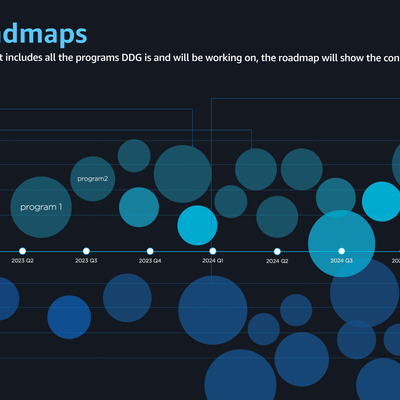
HOW — the DDG roadmap and dashboard, showing program distribution across H1/H2/H3 (horizon framework maps short term to long term), resource and budget allocation, and delivery status.
The space was designed to create the principle of what the team called "harmony," surfacing where solutions across Alexa, FTV, and other product endpoints were working together and where they were breaking. The Nerve Center made that visible for the first time.
Phase 2: Digital Nerve Center
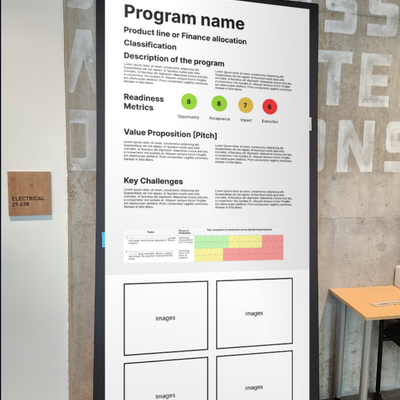
As the program matured, teammates developed the framework for the digital parallel: a virtual space and operational mechanism that would keep the same picture alive and updated between physical visits. This involved designing the ingestion and update system, a mechanism that determined how partner teams would feed data in, how it would be evaluated and curated, and how it would flow into what leadership saw. I piloted it across seven flagship device programs that included Fire TV, tablets, and Alexa.
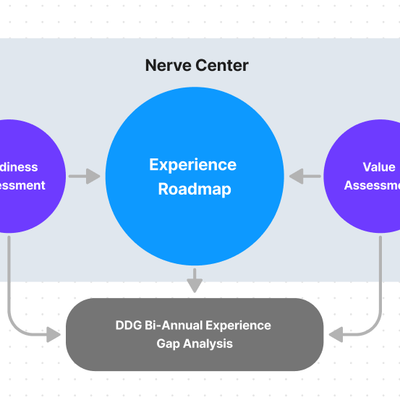
We created a core mechanism: Concept Experiences (forecasted) entering via a Readiness Assessment, Launch Experiences (committed) entering via a Value Assessment, both feeding into the Experience Roadmap at the center, and all of it cycling back through a DDG Bi-Annual Experience Gap Analysis. The digital NC was both a communication surface and an operational feedback loop.
The Strategic Complexity
This wasn't just a design project; it was an alignment project that materialized in both physical and digital forms. The biggest hurdles were organizational rather than conceptual, as tracking other teams' roadmaps and correlating statuses spanned over 24 distinct groups. We knew if teams didn't see their own work reflected in the NC, they would disengage entirely. To solve this, we built a logic system that allowed every team to see exactly how their specific offering fit into the broader portfolio and found common denominators to ensure parity.
At the same time, leadership held competing ideas about the NC's actual purpose. Some viewed it as a status reporting tool, while others saw it as a space for design critiques. I maintained steady boundaries, keeping the focus on the fact that the NC was a mechanism for shared understanding, not an operational dashboard. The program was tightly entangled with the physical space, the experience vision, and a third concurrent strategic initiative. The challenge was ensuring all three initiatives could see themselves in the NC's framework without the NC collapsing into any single one of them. Ultimately, working on this project required a constant balance between tracking internal metrics and maintaining focus on the core customer story: what we were solving, who we were solving it for, and how our experiences connected to that answer.
The program ran successfully for 18 months and gave cross-functional design leadership a single, unified view of committed and forecasted customer experience work across Alexa, Fire TV, tablet, and EFD, something no existing process had provided. By the end of this period, the physical NC was piloted, the digital framework was fully defined and documented, and the three-component definition, space strategy, and evaluation criteria were all completed. The project was eventually rescoped and ownership was transferred to another team due to shifting organizational priorities and a leadership realignment following a company reorg, rather than any issues with the quality of the work itself.
 Amazon


